Our multidisciplinary research group attempts to understand a future world with a warmer climate and different land uses.
Earth's surface processes and landforms are the interface between the geologic, biologic, hydrologic, atmospheric and human processes that drive environmental change.
Our work contributes to improved understanding of our future world, by investigating the impacts of changing land use, land management and climate.
We combine Earth observation data with field and laboratory measurements to improve numerical modelling of contemporary processes and landforms as the analogue to reconstruct past and predict future landscapes under a changing climate.
Environmental change in drylands
The world’s drylands cover about half of the Earth’s land surface, are getting hotter, drier and expanding in size. Drylands are home to some of the most vulnerable developing countries which are projected to experience 78% of the global dryland expansion and 50% of human population growth by 2100. Concurrently, the risks of climate change to dryland agriculture, biodiversity, and livelihoods are vast.
We are working on Drought Resilience in East African Dryland Regions (DRIER), the translation of climate information into multilevel decision support for social adaptation, policy development and resilience to water scarcity (Down2Earth) and groundwater recharge processes, quantification and sensitivities to environmental change.
We are investigating the triggers, mechanisms and changing interactions between drought, fire, vegetation cover and dust emission and their implications for the carbon, water, energy and dust cycles. In addition to the expansion of Earth’s drylands, we are investigating the processes occurring at the ocean-land interface that are a direct result of a changing climate are also important to understand in situ in order to derive accurate projections.
Near-Surface processes, risks, and hazards
Our work seeks to develop a stronger understanding of the physical, chemical, and biological controls on near-surface processes. We integrate process insights across a wide range of environments from mountains to coasts. Applications of near-surface process modelling and observation allow us to constrain hazards, particularly rare, large earthquakes and storms, and how these may change under differing climates and land uses.
We work across disciplines with social scientists and ecologists to explain the relationships between hazard and vulnerability that control the risks associated with near surface processes. For example, our work is contributing to societies transitioning to carbon neutrality and tackling land degradation estimated to currently affect >25% of the global land area costing nearly $66 billion per year. We are exploring sediment, soil (organic carbon; OC) and nutrient redistribution across scales. We are contributing to understanding the fate of SOC and the role of soil erosion in atmospheric CO2 and interactions between land use and changing nutrient emissions (NOx, ammonia). Whether changing dust emission is changing net heating / cooling of Earth is being explored via changing drought, fire, vegetation cover and wind speeds.
Monitoring, measurement and modelling
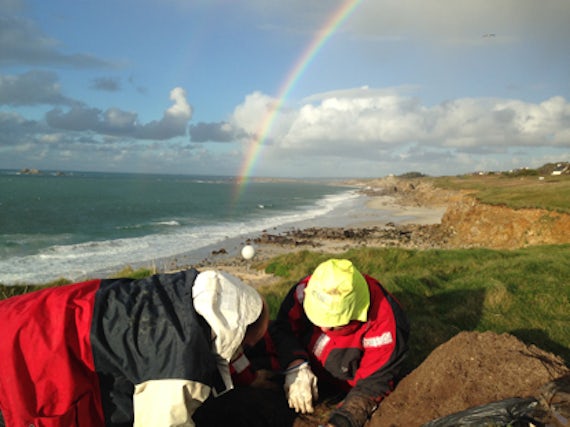
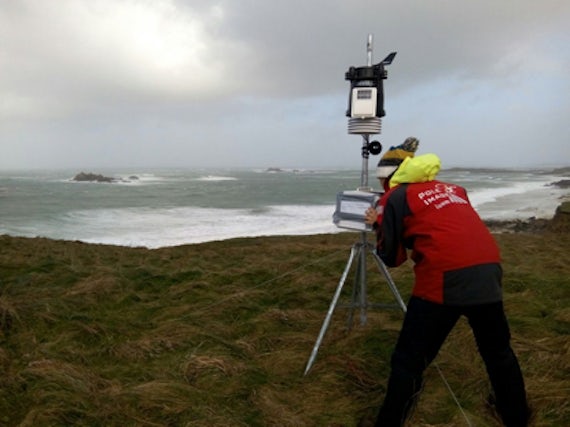
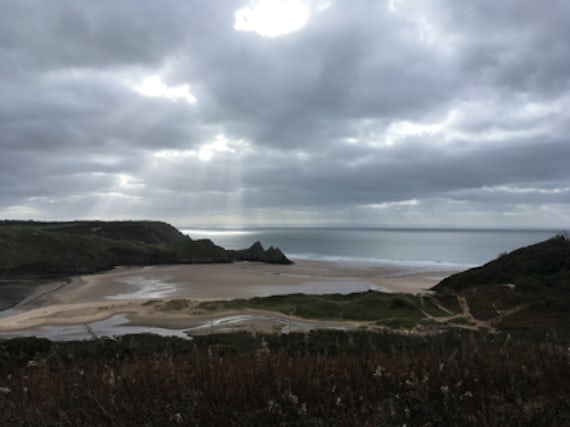
We combine Earth Observation (monitoring) data with field and laboratory measurements to improve numerical modelling across spatio-temporal scales of Earth’s surface processes and landforms. For example, we use this approach for nearshore hydrodynamics and beach morphology with airborne, satellite and camera imagery, and monitoring harder rock coastal cliff-top ground motions, and erosion in situ under extreme wave conditions to understand nearshore coastal cliff erosion. We use novel ground-based sampling and geostatistical analyses including stochastic simulation to model spatio-temporal variation of environmental properties e.g., rainfall.
We work with regional stakeholders on early detection and classification of fires in the Amazon region to preserve tropical forests. Our new momentum drag partition is being tested using the Google Earth Engine (daily, 500 m) to improve global dust emission in forecasting systems in the USA and Australia and evapotranspiration dynamics for modifying parameterisation of land surface-atmosphere interactions in Earth System Models.
We use field based and modelled data in both temperate and polar environments under extreme forcing conditions to determine how increased wave energy and sea levels influence the changing coastline/landscapes
Selected publications
- Andela, N. et al. 2017. A human-driven decline in global burned area. Science 356(6345): 1356-1362.
- Baker A, …, Cuthbert, M. O. et al. (2019). Global analysis reveals climatic controls on the oxygen isotope composition of cave drip water. Nature Communications, 10, 2984.
- Chappell, A, et al., (2019). Minimising soil organic carbon erosion is essential for land degradation neutrality. Environmental Science and Policy, 93: 43-52.
- Chappell, A. et al., (2016). The global significance of omitting soil erosion from soil organic carbon cycling models. Nature Climate Change 6: 187–191.
- Chen, S-A., Michaelides, K., Grieve, S.W.D., Singer, M.B.; Aridity is expressed in river topography profiles globally, Nature, 573: 573–577.
- Chen, Y.et al. 2017. A pan-tropical cascade of fire driven by El Niño/Southern Oscillation. Nature Climate Change 7(12): 906-911.
- Cox R, … Earlie C., et al. (2020) Systematic review shows that work done by storm waves can be misinterpreted as tsunami-related because commonly used hydrodynamic equations are flawed. Frontiers in Marine Science 7, article 4.
- Cuthbert, M. O. et al. (2019). Global patterns and dynamics of climate-groundwater interactions. Nature Climate Change, 9, 137-141.
- Cuthbert, M. O. et al. (2019). Observed controls on resilience of groundwater to climate variability in sub-Saharan Africa. Nature, 572: 230-234.
- Earlie, C., et al., (2015) Coastal cliff ground motions and response to extreme storm waves. Geophysical Research Letters,42(3), pp 847-854
- Earlie, C., Masselink, G., Russell, P. (2018) The role of beach morphology on coastal cliff erosion under extreme waves. Earth Surface Processes and Landforms, 43(6) pp. 1213-1228
- Francis, O., Hales T.C., Hobley, D., Fan, X., Horton, A.J., Scaringi, G., Huang, R. 2020. The impact of earthquakes on orogen-scale exhumation Earth Surface Dynamics 8, pp. 579-593.
- Hales, T.C., 2018. Modelling biome-scale root reinforcement and slope stability. Earth Surface Processes and Landforms. 43(10),pp. 2157-2166.
- Hickman, J. E.et al. 2021. Reductions in NO2 burden over north equatorial Africa from decline in biomass burning in spite of growing fossil fuel use, 2005 to 2017. Proc. National Academy of Sciences 118(7).
- Michaelides, K., Hollings, R., Singer, M.B., Nichols, M., Nearing, M.; Spatial and temporal analysis of hillslope-channel coupling and implications for the longitudinal profile in a dryland basin, Earth Surface Processes and Landforms, 43: 1608–1621.
- Ran, J. MacGillivray, B.H., Gong, Y., Hales T.C., 2020. The application of frameworks for measuring social vulnerability and resilience to geophysical hazards within developing countries: A systematic review and narrative synthesis. Science of the Total Environment, 711, article number: 134486. (10.1016/j.scitotenv.2019.134486)
- Singer, M.B., Michaelides, K.; Deciphering the expression of climate change within the Lower Colorado River basin by stochastic simulation of convective rainfall, Environmental Research Letters, 12:104011.
- Zeng, Z., … Chappell A. et al., (2019) A reversal in global terrestrial stilling and its implications for wind energy production. Nature Climate Change 9: 979–985.
Funding
- Singer, M. DOWN2EARTH: Translation of climate information into land-based climate services for social adaptation, policy development, and overall resilience to water scarcity in East African drylands. European Union’s Horizon 2020 Program,€ 6.645m.
- Cuthbert, M. O. Groundwater recharge in global drylands: processes, quantification & sensitivities to environmental change. NERC NE/P017819/1. 2017-2022, £717k.
- Chappell, A. Aeolian dust responses to regional ecosystem change (with Jornada Experimental Range, USDA / New Mexico State University) NSF-NERC, 2019-2022. £350k
- Earlie, C. Wave induced microseismic ground and glacier motions in polar environments, NPI Ny Ålesund Research Station, Svalbard. The Royal Society, 2019-2022, £20k.
- Hales, T. C. Resilience to Earthquake-induced Landslide Hazard in China (REACH). NERC Directed Programme. NE/N012240/1. 2015, £500k.
- Andela, N. Tropical savannas in transition: Tracking global savanna-fire interactions with ICESat-2. NASA Research Opportunities in Space and Earth Science (ROSES), 2020-2023, $590 k.
Selected publications
There was an error in processing data returned back from the API: Unexpected token < in JSON at position 0.
Academic staff

Professor Adrian Chappell
Professor in Climate Change Impacts
- chappella2@cardiff.ac.uk
- +44 (0)29 2087 0642




Professor Michael Singer
Professor Deputy Director of the Water Research Institute
- singerm2@cardiff.ac.uk
- +44 (0)29 2087 6257

Dr Diana Contreras Mojica
Lecturer in Geospatial Sciences
- contrerasmojicad@cardiff.ac.uk
- +44 029208 74333

Postgraduate students






Associated staff



Professor Thomas Blenkinsop
Professor in Earth Science
- blenkinsopt@cardiff.ac.uk
- +44 (0)29 2087 0232


Dr Shasta Marrero
Lecturer in Environmental and Physical Geography
- marreros@cardiff.ac.uk
- +44 (0)29 2087 4579