Professor Steve Ormerod
Professor
- ormerod@cardiff.ac.uk
- +44 (0)29 2087 5871
- Fax:
- +44 (0)29 2087 4116
- Sir Martin Evans Building, Museum Avenue, Cardiff, CF10 3AX
- Media commentator
Overview
Research overview and external responsibilities
Complementing the perspectives of other members of the Organisms and Environment Division, my work is explicitly ecological and unified by the theme of ecosystem-scale perspective of rivers, lakes and wetlands. Activities focus on:
- Global change effects on freshwater organisms and ecosystems
- River Ecosystem services
- Pollution including #microplastics
- The ecology of river and wetland birds
Solutions to the problems of freshwater ecosystems through policy and management are also an important focus, and I co-direct the University’s Water Research Institute having been instrumental in its formation. I'm also involved in the application of ecology as Deputy Chairman of Natural Resources Wales (the largest Welsh Government sponsored body), a member of the UK Joint Nature Conservation Committee, Chairman of Buglife (Europe's Invertebrate Charity) and Vice President of the RSPB (Europe's largest wildlife charity).
Each of these themes is expanded under 'Research', while my extensive involvement with NGOs, professional bodies, businesses and government organisations is outlined under 'Biography'.
Roles
Academic Team Leader
School of Biosciences Ethics Committee
European Languages
French (fluent)
Biography
Current responsibilities
- UK Joint Nature Conservation Committee (2018 -
- Deputy Chairman, Natural Resources Wales (2018 -
- Chairman, Buglife (The Invertebrate Conservation Trist) (2018 - )
- Vice-President, Royal Society for the Protection of Birds (2018 - )
- Full Member, NERC Peer-review College (2011- )
- Co-Director, Cardiff Water Research Institute (2015 - )
- Member, editorial board of Aquatic Conservation : Marine and Freshwater Ecosystems (1998- )
- Member, editorial board, Global Change Biology (2015 - )
Past responsibilities
- Member of Council of the Countryside Council for Wales (1991-1994);
- Member, Department of the Environment Acid Waters Review Group (1987-1988);
- Member, Department of the Environment Review Group on Nitrogen Deposition (1991-1992);
- Member, DETR Critical Loads Advisory Group (1989-1996);
- Member, DETR National Expert Group on Transboundary Air Pollution (1999-2002);
- Co-ordinating peer reviewer, Defra 'Farmland Conservation and Biodiversity' research (2004-2005)
- Member, Agence National de la Recherche : Institut Français de la Biodiversité, Commission d'évaluation de la recherche en Biodiversité (2005)
- Member, Ecology and Environmental Biology Review Panel, Research School for Socio-Economic and Natural Sciences of the Environment (SENSE The Netherlands)
- Member, Science Advisory Committee of the Wildfowl and Wetlands Trust (1996-2006)
- Member, Ornithological Affairs Committee, British Ornithologists' Union (1998-2002);
- Member of Council, Freshwater Biological Association (2000-2004)
- Member, RSPB Wales' Advisory Committee (1996-2007)
- Chief Editor of the Journal of Applied Ecology (1999-2005)
- Editorial board member, Environmental Pollution (1988-2002 )
- President, Institute of Ecology and Environmental Management Chartered Institute of Ecology and Environmental Management (2008-2011)
- Member of Council and Trustee, Royal Society for the Protection of Birds (2001- 2017)
- Chairman, RSPB Wales Advisory Committee (2007-2012)
- Trustee, The Rivers Trust (2008-21012)
- Expert Panel Member and Freshwater co-leader, National Ecosystem Assessment (2009-2012) for Defra and the Devolved Administrations
- Trustee and Council Member, British Trust for Ornithology (2011-2012)
- Lead reviewer, Defra Environmental Stewardship Research (2011-2012)
- Chair of Council, Royal Society for the Protection of Birds (2012- 2017)
- Chair of Science Development Group, Centre for Ecology and Hydrology (2013 - 2018)
- Chairman, Dwr Cymru/Welsh Water Environment Advisory Panel (2015- 2018)
Honours and awards
- Elected Fellow, Freshwater Biological Association (2020)
- Elected Fellow, Royal Society of Biology (2013)
- Elected Fellow, Learned Society of Wales (2013)
- Marsh Award for Marine and Freshwater Conservation (2012; Zoological Society of London)
- Past-President's Medal, Chartered Institute of Ecology and Environmental Management (2010)
- Ralph Brown Expedition Award (1999; Royal Geographical Society)
- Elected Fellow, Chartered Institute of Ecology and Environmental Management (1997)
- Fellow, Winston Churchill Memorial Trust (1987)
Publications
We are currently unable to retrieve the list of publications. Visit our institutional repository.I came to Cardiff in 1980 for the prestigious UWIST MSc in Applied Hydrobiology, from there completing a PhD on water quality and invertebrates in the Wye river-system. Simultaneously, I developed an interest in the ecology of river birds, showing for the first time how this group was affected by acid rain. These major themes — multiple global-scale pressures on freshwater ecosystems, river invertebrates and birds in aquatic habitats — have continued to provide my major research models.
From 1984, I led a post-doctoral group investigating the ecological effects of acidification in upland rivers using surveys, models and ecosystem-scale experiments at the Llyn Brianne Stream Observatory. These experiments have now run for almost 40 years, and my ecosystem-scale work has expanded to encompass global change effects on freshwaters ecosystems on three continents. Most recent work with a wide range of colleagues continues to expand our evidence about the sensitivity of running waters to climate change while also telling the remarkable story of how the recovery of British rivers from gross sanitary problems has been tempered by the growing challenge of diffuse pollution from urban and rural sources.
So far, my career total of over 300 scientific publications have been cited almost 16,000 times at H > 65 (Google Scholar).
Research areas
Global change effects on freshwater organisms and ecosystems
For almost four decades, prominent themes in my work have been large-scale, long term impacts of global change on freshwater ecosystems as well as ecosystem recovery where multiple stressors have been managed or removed (see ‘Publications’)
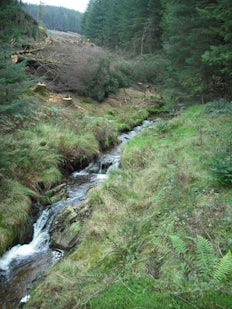
Our globally unique Llyn Brianne Stream Observatory, operational from 1981, has multiple experimental and reference streams that have figured prominently in understanding global change effects on freshwater ecosystems. The site also a suite of replicate, cascading experimental channels that figure increasingly in research work.
River ecosystem services
River ecosystem services have become an increasingly important focus in my work, in particular to understand how biodiversity supports services and how environmental stressors erode ecosystem functions and service delivery.
Examples include:
- Co leadership of the freshwater sections of the National Ecosystem Assessment http://uknea.unep-wcmc.org/ for Defra and the Devolved Administrations (Maltby & Ormerod 2011 http://uknea.unep-wcmc.org/Resources/tabid/82/Default.aspx )
- Acting as Cardiff PI in the £3.1 million NERC BESS project, Duress http://nerc-duress.org/ (Diversity in Upland Rivers for Ecosystem Service Sustainability; from 2012)
- Acting as Cardiff PI and co-leader of catchment studies in the €9 million EU-funded MARS project (Managing Aquatic ecosystems and water Resources under multiple Stress; from 2014)
- The UK NEA assembled key data on the status and trends in ecosystem services delivered by British fresh waters.
Pollution including #microplastics
Long-standing interest in the effects of pollution on freshwaters - including acid rain, wastewater and xenobiotic substances - led in 2016 to some of the world's first assessments of microplastics in river food webs. Investigation of the Wye, Usk and Taff revealed that around 50% of insects contained plastic fibres (Windsor et al. 2019). Further work is now underway to assess how this material is transferred to riverine predators, and also to assess its sources, fluxes, fate and effects in the river environment.
The ecology of river and wetland birds
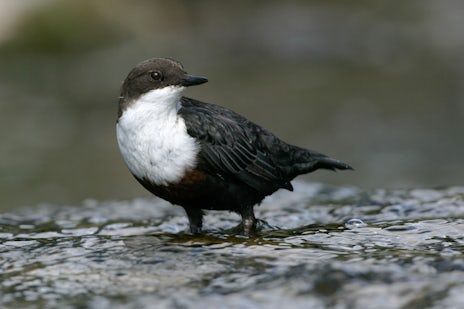
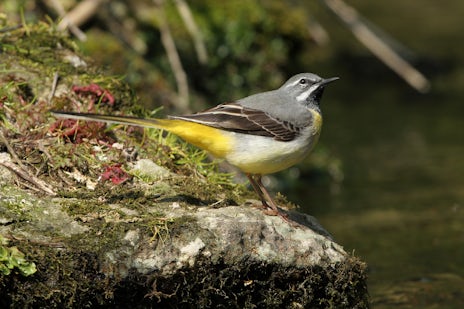
I became interested in river-birds, and in particular dippers, while researching aquatic invertebrates for my PhD. This interest led to some of the world's first evidence that birds could be affected by acid rain (eg Ormerod et al. 1991), and in turn some of the world's best known autecological bird research. The concept of using dippers as indicators of acidity led to research into their role as indicators of broader aspects of water quality that currently includes legacy or emerging contaminants, diffuse pollution and microplastics. I collaborate with the Wildlife Institute of India in investigations into the effects of global change on Himalayan rivers – where the most diverse assemblage of river birds on Earth occupies one of its most rapidly changing regions.
Grants
Current and recent sponsors include:
- Natural Environment Research Council (including the £3.1 million Duress Project and the FRESH Centre for Doctoral Training)
- European Union (where we co-led catchment-scale in the €9 million MARS project)
- Esmée Fairbairn Foundation (who have funded the Llyn Brianne Stream Observatory)
- Defra
- Natural Resources Wales
- Knowledge Exchange Studentship Scheme
- Leverhulme Trust
- BBSRC
- ESRC
- Daphne Jackson Trust
- The Royal Society
- RCUK
- Wessex Water
- Countryside Council for Wales
- LWEC
- Swiss Foundation for Scientific Research
- The Welsh Government
- The Environment Agency
- Freshwater Biological Association
- Royal Geographical Society
- National Geographic Society (USA)
- National Museum of Wales
- Wye and Usk Foundation
- Scottish Environmental Protection Agency
- Cardiff City Council
- Forestry Commission
- SMEs (Shawater Ltd, Ambient Hydro, APEM Ltd, ENSIS Ltd, Cascade Consulting)
Successfully completed PhD students
- Dr Fred Windsor (Joiny with Prof Charles Tyler, Exeter) The transfer and ecological effects of xenobiotic pollutiin in freshwater ecosystems
- Dr Rhodri Thomas (President's Studentship with Ian Vaughan and Jose Constantine) Predicting river habitat response to climate change
- Dr Norhisham Ahmad Razi (Joint with the late Mark Jervis and Hefin Jones) Insect life-history response to global change
- Dr Rhian Newman (Joint with Sian Griffiths and Bill Riley CEFAS) Artificial light and predator-prey dynamics in freshwaters
- Dr Marian Pye (Joint with Isabelle Durance and Ian Vaughan) Catchment and riparian subsidy effects on upland stream ecosystems
- Dr Hannah Burton (President's Studentship joint with Mike Bruford and Hefin Jones)
- Dr Caitlin Pearson (BBSRC studentship with Ian Vaughan and Bill Symondson) Agricultural effects on upland rivers
- Dr Matt Dray (Presidents Studentship joint with Hefin Jones, Sue Hartley (York) and Rupert Perkins) Effect of elevated CO2 on tree litter chemistry and decomposition
- Dr Kate Walker-Springett (ESRC/NERC Studentship joint with Jose Constantine and Lorraine Whitmarsh) Public perception of habitat management for pearl mussel in response to climate change
- Dr Paul Sinnadurai (Jointly supervised with Dr Hefin Jones) Dispersal and distribution in riparian Coleoptera
- Dr Stephen Thomas (KESS Studentship joint with Sian Griffiths) Riparian management effects on macroinvertebates and salmonids in upland streams affected by climate change
- Dr Alisa Watson (NERC CASE studentship with WWT) The ecology of scarce wetland molluscs
- Dr Beth Lewis (Wye and Usk Foundation; co-supervised with Dr Brian Reynbolds, CEH Bangor) The effects of liming on invertebrate recovery from acidification
- Dr Clare Bale (NERC; jointly supervised with Dr Sian Griffiths) Behavioural avoidance and sheltering behaviour of salmonids during acid episodes
- Dr Dave Bradley (PhD studentship funded by Defra) Dynamic processes in acid senstitive streams
- Dr Emma Durward (Cardiff University/Llysdinam Trust; co-supervised with Dr Fred Slater)
- Dr Esther Clews (Wye and Usk Foundation) The effects of hydrochemical restoration on river organisms
- Dr Fabio Lepori (PhD studentship funded by the Swiss Foundation for Scientific Research) The ecological effects of acid episodes in the Swiss Italian Alps
- Dr Faye Merrix (Cardiff City Council; Jointly supervised by Dr Steve Thackaeray, CEH Lancaster) Zooplankton ecology in Cardiff Bay
- Dr H. Ceri Williams (NERC studentship; co-supervised with Prof Mike Bruford) Dispersal and genetic variation in Baetis mayflies
- Dr Heike Hirst Ecological influences on diatom responses to water quality
- Dr Hem Sagar Bharal (Joint with the University of Amsterdam) Community structure and habitat associations of lowland grassland birds of Nepal.
- Dr Ian Vaughan (PhD Studentship funded by the Environment Agency) Modelling the distribution of river birds using habitat data
- Dr Jacqui Barnes (NERC; joint supervision with Dr Ian Vaughan) Habitat complexity and river biodiversity
- Dr Laura Trodden (Cardiff School of Engineering; jointly supervised with Dr Catherine Wilson) Climate change, stream hydraulics and stream invertebrates
- Dr Liz Chadwick (Cardiff University/Llysdinam Trust; co-supervised with Dr Fred Slater) The influence of climatic variation on the ecology of common toads
- Dr Muriel Alix (Cardiff City Council) The ecology of invasive zebra mussels in Cardiff Bay
- Dr Renata Kowalik (PhD studentship funded by Defra) Detecting and modelling the effects of acid episodes on stream fauna
- Dr Richard Jenkins The ecology of Water Rail Rallus aquaticus
- Dr Seb Buckton The ecology of Himalayan River Birds
- Dr Stefano Larsen (Wye and Usk Foundation) Effects of sediment deposition on upland stream organisms
- Dr Zoe Masters (FBA/Cardiff University Ray Beverton Memorial Studentship) The effects of geographical isolation on stream recovery from acidification