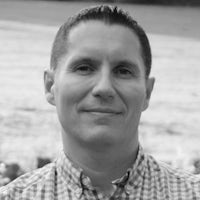
Professor Phil Stephens
Director off International, Professor of Cell Biology
- stephensp@cardiff.ac.uk
- +44 (0)29 2074 2529
- University Dental Hospital, Heath Park, Cardiff, CF14 4XY
- Media commentator
- Available for postgraduate supervision
Overview
Director of International Matters, Professor of Cell Biology, HTA Research Licence Designated Individual and Academic Lead for Cardiff University Biobank.
Research group
Regenerative Biology Group
Biography
Professor Phil Stephens is currently Professor of Cell Biology and the Director of International Matters within the School of Dentistry, College of Biomedical and Life Sciences, Cardiff University. He moved to Cardiff University in 1994 as Post Doctoral Researcher having obtained a first class honours degree and a PhD from Leeds University. Subsequently he established the Wound Biology Group with a clinical colleague. His research interests are in the fields of oral progenitor cells, differential wound healing, ageing, tissue engineering, animal replacement model systems and cellular imaging. Within these areas he has managed research projects (Research Council, Charity and Industry) totalling over £4.5 Million, published widely, filed patents and his group have won many National and International prizes. Externally he works closely with organisations such as the National Centre for the Replacement, Refinement and Reduction of Animals in Research and reviews grant applications and manuscripts for numerous national and international funders/journals. He is also the Academic Lead for the Cardiff University Biobank which supplies human biosamples for research centred on the betterment of human health.
Professional memberships
- British Society of Oral and Dental Research
- European Tissue Repair Society
- Member of the Cardiff Institute of Tissue Engineering and Repair.
Academic positions
2010 – 2015 Professor of Cell Biology, Vice Dean (Research), Chair of the Cardiff Institute of Tissue Engineering and Repair, Human Tissue Act Designated Individual
2008 – 2010 Professor of Cell Biology, Head of Tissue Engineering & Reparative Dentistry, School of Dentistry, Cardiff University, Cardiff
2004 – 2008 Reader in Cell Biology, Wound Biology Group, Dept. Oral Surgery, Medicine & Pathology, School of Dentistry, Cardiff University, Cardiff;
2002 – 2004 Senior Lecturer in Cell Biology, Dept. Oral Surgery, Medicine & Pathology, Dental School, UWCM, Cardiff;
1998 – 2002 Lecturer in Cell Biology, Dept. Oral Surgery, Medicine & Pathology, Dental School, UWCM, Cardiff
Publications
We are currently unable to retrieve the list of publications. Visit our institutional repository.Teaching
Dental BDS (Oral Ecosystems)
MSc Tissue Engineering and Regenerative Medicine
MSc Oral Biology
MSc Implantology
Oral Mucosal Lamina Propria-Progenitor Cells for tissue repair:
Wounds in the mouth heal extremely well compared to normal skin wounds in that they demonstrate little or no scarring. We have been investigating the cells from soft tissues within the mouth and have demonstrated that they are different to skin cells and in fact are more like foetal cells. This suggested that the cells from the mouth may actually be more like stem cells. Our recent work has identified such a stem cell−like cell within the mouth that can make various tissue types, are potent at down-regulating the immune system and have anti-bacterial properties. Hence, such cells may be useful to (a) help repair/regenerate damaged or diseased tissue, (b) help down-regulate the immune system during transplantation or after individuals have suffered from an auto-immune diseases and (c) be useful in combating infections/cancer. Importantly, because tissue containing the oral cells is easy to access and heals without a scar this could be the preferential source for stem cells for future patient therapy (patents awarded and filed; funded by the MRC).
Chronic wound healing:
We have had a long-term interest in the spectrum of wound responses including those that do not heal (chronic venous leg ulcers, diabetic foot ulcers). We have already demonstrated, through our in vitro analyses, that the molecular and cellular responses of fibroblasts from chronic wounds are dysfunctional. This includes our observations that chronic wound fibroblasts demonstrate premature senescence which impacts on their ability to drive repair of the wound due to a lack of production of several key chemokines. We are now developing these chronic wound cells strains into well characterised chronic wound cell lines which may have the potential to replace some animal experimentation for the future pre-screening of materials which may have beneficial effects for chronic wound sufferers.
Stem cell tracking:
One of the major barriers to translation with respect to tracking stem cell lineage/fate has been the ability to image cells within 3D tissues in real time. Traditionally, this has been attempted using fluorescence-based light imaging techniques with 3D sectioning capabilities such as laser-scanning confocal or multi-photon microscopy to provide quantitative, real-time imaging of cells. However, such an approach is limited due to photobleaching and the phototoxic effects of the fluorochrome label/moiety utilised. Hence we are working across disciplines (Physics and Chemistry) to develop novel, non-destructive imaging modalities (PET and MRI-based) to track stem cells and their progeny in real time in patients (funded by the EPSRC and the Wellcome Trust).
Biobanking:
Through my role as HTA Designated Individual at Cardiff University I am currently establishing the Cardiff University Biobank to coordinate research access to human tissue samples and data across and outwith the University.
Collaborations:
- Steve Paisey/Ian Fallis/Angelo Amoroso (Cardiff University, UK) – Novel methods for stem cell tracking
- Aled Clayton/Helen Brown (Cardiff University, UK) – Oral progenitor cells as anti-bacterial agents
- Rob Knight (UCLA, USA) - Oral progenitor exosomes as an anti-scarring agent
- Hans von den Hoff (Radboud University Medical Center, The Netherlands - Oral progenitor exosomes as an anti-scarring agent
Awards
- Phil Stephens: Welsh Livery Guild Merit Award (2012)
- Rachel Howard-Jones: Poster Prize (Cardiff University Postgraduate Research Day, 2009); Oral Prize (Cardiff University Postgraduate Research Day, 2011); British Society for Oral and Dental Research Senior Colgate Prize (2012); Tissue Cell Engineering Society Poster Prize (2014)
- Adam Glen: Tissue Cell Engineering Society Oral presentation prize (2013)
- Emma Board Davies: Oral presentation prize (CITER annual scientific meeting, 2014)
- Lorena Hidalgo San Jose: Oral presentation prize (CITER annual scientific meeting, 2015)
Tissue engineering and repair expertise
- Oral progenitor cell biology (lineage development/control, immunosuppression)
- Fibroblast/extracellular matrix biology
- Development of in vitro systems to replace animals in experimentation
- Live cell imaging
- Wound healing bioassays
- Access to ethically sourced clinical material for research purposes
Supervision
- Oral progenitor cell small extracellular vesicles as anti-scarring and antimicrobial agents
- Development of long-term cell tracking agents (PET, MRI)