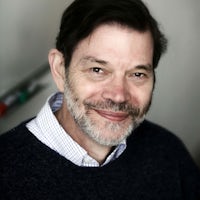
Professor Jonathan Erichsen
Professor of Visual Neuroscience
- erichsenjt@cardiff.ac.uk
- +44 (0)29 2087 5656
- Fax:
- +44 (0)29 2087 4859
- Optometry and Vision Sciences, Maindy Road, Cathays, Cardiff, CF24 4HQ
- Media commentator
- Available for postgraduate supervision
Overview
Research interests
I have long-standing research interests in all aspects of the control of visuomotor behaviour, including eye movements, with the goal of achieving a better understanding of the interaction between sensory and motor mechanisms within the visual system.
One principal focus of my past work has been defining and stimulating the central near response pathways in the brain, including vergence and the pupillary light reflex, in order to better understand the interrelationship between accommodation and refractive development of the eye. This led to a growing interest in normal and abnormal eye movements in people (children as well as adults).
Nearly twenty years ago, I established the Cardiff Research Unit for Nystagmus (RUN) to conduct studies of eye movement disorders in people with infantile nystagmus in order to better understand the impact of the continuous oscillatory eye movements on their vision and everyday life.
More recently, I founded the Eye Movement Experimental Research Group (EMERG) to reflect the expansion of our research into eye movement abnormalities of those with neurodegenerative conditions, such as Huntington’s disease, as well as others, such as young children at risk of schizophrenia, or adults suffering from dystonia.
Biography
Education and professional qualifications
- 1972: AB (First Class Honours in Biology) Harvard University
- 1979: DPhil (Zoology) University of Oxford
- 1979 - 1983: National Eye Institute (NIH) Postdoctoral Fellowship, Stony Brook University, NY (USA)
Honours and awards
- 1972: Summa Cum Laude, Phi Beta Kappa
- 1972: NSF Postgraduate Studentship
- 1972 - 1975: Marshall Scholar
- 1972 - 1979: Danforth Foundation Fellow
Professional memberships
- Applied Vision Association (AVA)
- Association for the Study of Animal Behaviour (ASAB)
Academic positions
- 2014 - present: Professor, School of Optometry & Vision Sciences, Cardiff University
- 2006 - 2014: Head, Visual Neuroscience & Molecular Biology Research Group
- 1995 - 2014: Senior Lecturer, School of Optometry & Vision Sciences, Cardiff University
- 1983 - 1996: Research Assistant Professor, Dept. of Neurobiology & Behavior, Stony Brook University, NY (USA)
- 1979 - 1983: NEI Postdoctoral Fellow, Dept. of Neurobiology & Behavior, Stony Brook University, NY (USA)
Speaking engagements
Academic Presentations
2020 Invited Speaker for Vision Bridge, 100% Optical meeting, London: “Improving sight tests for infantile nystagmus”
2017 Invited speaker, Vision 2017, 12th International Conference by the International Society for Low Vision Research and Rehabilitation (ISLRR), The Hague, Netherlands: “Do nystagmus eye movements have an impact on visual acuity?”
2017 Invited speaker, Ophthalmology Consortium (Oxford, Bristol, Cardiff & Southampton): “The mysteries of nystagmus”
2016 Invited keynote speaker, 11th Panhellenic Conference on Optics and Optometry, Athens, Greece:
“Current eye tracker technology: Impact on our understanding of oculomotor disorders and its potential for the clinic”
2016 Invited keynote speaker, Vision Research Workshop, Almaty, Kazakhstan: “Investigations of visuomotor behaviour and its impact on visual perception”
2015 Invited participant, Retirement Festschrift for Lord Krebs of Wytham, Camargue, France
2015 Invited speaker, British Isles Paediatric, Ophthalmology and Strabismus Association, Cardiff:
“Current eye tracker technology and its potential for motility testingin the clinic”
2015 Invited speaker, International Pupil Colloquium, Oxford: “Pupillometry: A window to the emotions?”
2015 Invited speaker and member of “Expert Panel”, 4th International Nystagmus Workshop, New Orleans, LA (USA):
“The impact of infantile nystagmus eye movements on visual performance”
2013 Ophthalmology Consortium (Oxford, Bristol, Cardiff & Southampton): “Visuomotor behaviour: From birds to humans”
2013 Invited speaker, 3rd International Nystagmus Workshop, Abingdon, Oxford: “Infantile nystagmus syndrome: What exactly is the null zone?”
2013 Invited speaker, Institute of Neuroscience, Trinity College Dublin, Ireland: “A bird’s eye view of the near response”
2012 Invited speaker, Dept. of Neurobiology & Anatomical Science, Univ. of Mississippi Medical Center, USA:
“Visuomotor behaviour: Dispatches from the avian front”
2011 Invited speaker, Gordon Conference, Maine, USA: Eye movements: The motor system that sees the world: “Magnetoreception in homing pigeons: The dynamics of saccadic head movements"
2010 Invited speaker, Society of Low Vision Specialists, Denmark: “A stable view of the world: Why do we move our eyes?”
2010 Invited speaker, EMSA Conference, Bodrum, Turkey: “Magnetic vision”
Public Engagement Events
- Interview with Richard Osman about his nystagmus [Mail on Sunday] - 4 November 2013
- Featured as Director of the Cardiff Research Unit for Nystagmus.
- Brain Games - 17 March 2013; 16 March 2014
- Wellcome Trust funded public engagement event produced by neuroscientists at Cardiff University for Brain Awareness Week hosted by the National Museum of Wales, to allow members of the public to explore different facets of neuroscience, mental health and biomedical ethics in a series of entertaining and stimulating activities for children and their parents.
- Nystagmus Network Open Day - 13 October 2011; 5 October 2013
- An invited speaker at this annual event hosted in London by the Nystagmus Network charity to enable those with nystagmus and their families to speak to medics, researchers and other professionals in an informal setting. There is also an exhibition area for low vision aids and local groups.
- Science in Health - 17 March 2011; 8 March 2012; 21-22 March 2013; 19-20 March 2014, Cardiff School of Medicine / University Hospital of Wales
Demonstrations to introduce high school students to the function of eye movements and how they are recorded in the course of basic research and clinical diagnosis. - Leverhulme Trust Newsletter - April 2011, Magnetoreception in the homing pigeon; (see page 10) An article about our recently funded research on the remarkable ability of homing pigeons to sense the earth's magnetic field and orient accurately to find their way home.
- Radio Wales Science Cafe - 4 April 2011
This week Adam Walton, from BBC Radio Wales, visits the School to take a closer look at one of the most complex organs in the human body: the eye. - Open Day for the Research Unit for Nystagmus (RUN) - 17 April 2010
First Open Day to pay tribute to and thank those who have volunteered for our studies, and to introduce those who were not volunteers to what we do in an informal environment. Interviewed by Insight Radio (RNIB). - Nystagmus Network (UK) - Research featured on charity web site and in Newsletters
- 1996-present - Alumni admissions interviewer for Wales & Southwest England, Harvard University; member of Harvard Club of the United Kingdom (HCUK)
- 2007-present - Organiser of the Cardiff Expat American Meetup Group
Committees and reviewing
- Lead, Visual Neuroscience
- Director, Research Unit for Nystagmus (RUN)
- Director, Eye Movement Experimental Research Group (EMERG)
- Student Staff Panel
- Extenuating Circumstances Committee
- BSc Board of Studies
- Neuroscience & Mental Health Research Institute Management Group
Recent university committees (2000-2012)
Publications
We are currently unable to retrieve the list of publications. Visit our institutional repository.Teaching
I deliver lectures in several different undergraduate modules, including Introductory Optometry, Binocular Vision & Neurophysiology, and Research in Optometry & Vision Science, for which I am also the module leader. In addition, I participate in practical sessions demonstrating prosections of head and neck anatomy for the Cells and System module.
My teaching covers the following subject areas:
- organisation, neuroanatomy & physiology of the retina and visual brain pathways
- development of the visual system
- vision agnosias
- visual perception
- characteristics and control of eye movements and their impact on vision
- research and the scientific method
For most of the early part of my career, my focus has been on defining and stimulating the central near response pathways in the brain, including vergence and the pupillary light reflex, in order to better understand the interrelationship between accommodation and refractive development of the eye. The techniques employed included, stereotaxic surgery, immunohistochemistry, neural pathway tracing, and microstimulation.
Over time, these studies led to a growing interest in tracking eye movement responses in typical adults, school age children, and babies. Nearly twenty years ago, I established the Cardiff Research Unit for Nystagmus (RUN) to conduct studies of eye movement disorders in people with infantile nystagmus in order to better understand the impact of the continuous oscillatory eye movements on their vision and everyday life. We are fortunate to have been able to recruit a large cohort of volunteers with this condition, and our experiments have demonstrated the effect of environmental influences, such as stress or visual demand, on the intensity of their oscillations. Importantly, however, our results demonstrate that the most commonly used measure of visual performance, visual acuity, is not significantly affected by changes in the eye movements of a given individual, suggesting the need for developing better outcome measures.
More recently, I have founded the Eye Movement Experimental Research Group (EMERG) to reflect the expansion of our research into eye movement abnormalities of those with neurodegenerative conditions, such as Huntington’s disease, as well as others, such as children at risk of schizophrenia or adults suffering from dystonia. One study with colleagues in Psychology involved using gaze-contingent paradigms to explore the ability to train visual attention in older children with autism. We are also currently exploring the impact of eye movements on perception in patients who have undergone epilepsy surgery.
My collaborations, both in the UK and internationally, have ranged from an assessment of nerve fibre layer damage in an experimental model of glaucoma to investigations of the role of the hippocampus in spatial navigation and visual discriminations. I was recently involved in leading a Leverhulme Trust funded interdisciplinary study with engineering colleagues to investigate the remarkable ability of homing pigeons to sense and orient with respect to the earth's magnetic field.
In the past, our work has been supported by grants from the BBSRC, Leverhulme Trust and Wellcome Trust, and currently by both the College of Optometrists and nystagmus charities (Nystagmus Network and IN-vision). Our laboratories include state-of-the-art histological and neuroscience laboratories, a suite of videomicrographic image processing workstations, and several dedicated eye tracking facilities that include both non-invasive infra-red recording systems and large high-performance stimulus display systems.
Supervision
I am interested in supervising PhD students in the areas of:
- human eye movements
- visual psychophysics and perception
- infantile nystagmus
- neurodegenerative disease
- neuroanatomy of spatial memory
Current supervision


Past projects
I have been involved in the successful supervision(*) or co-supervision of twenty PhD students:
2021 Dr Nikita Thomas
Retinal predictors of visual performance in infantile nystagmus
2020 Dr Asma Ahida Binti Ahmad Zahidi
Characteristics and impact of nystagmus in children with and without Down's syndrome
2020 Mr James Brawn [MPhil]*
Evaluating eye movements as biomarkers for monitoring the progression of Huntington's Disease to facilitate early intervention and clinical management (J.E. Williams Endowment)
2017 Dr Yu Huang
Gene-environment interactions in myopia
2015 Dr John Barnes*
Magnetoreception in the homing pigeon (Columba livia)
2015 Dr Vandeflors Vinuela Navarro
The assessment of tracking difficulties in children
2015 Dr Lee McIlreavy*
Models of oculomotor control as a means of understanding oscillopsia
2015 Dr Noor Aldoumani
Engineering approaches to biological magnetoreception
2014 Dr Matt Dunn*
Developing appropriate measures of visual performance in nystagmus
2012 Dr Chris Dillingham*
A characterisation of the Centrifugal Visual System and its potential influence on emmetropisation
2012 Dr Mizhanim Mohamad Shahimin
Development and validation of a digital quantitative orthoptics workstation
2012 Dr Yaiza Garcia Sanchez
Analysis of retinal image quality for peripheral vision in humans and pigeons (Columba livia)
2011 Dr Philip Jones*
The impact of stress on visual function in nystagmus
2011 Dr Szymon Migalski*
A novel method for investigating magnetoreception in the homing pigeon
2010 Dr Yen-Po (Paul) Chen
The role of genetics in susceptibility to environmentally-induced myopia
2010 Dr Paulina Samsel
Retinal plasticity in experimental glaucoma
2007 Dr Debbie Wiggins*
The impact of orbital eye position, visual demand and stress on infantile nystagmus syndrome
2005 Dr Sarah Farrant Taylor
Pathophysiology of retinal ganglion cell death in glaucoma
2002 Dr Nick Wright*
CNS control of the near response
2001 Dr Sally Blewitt
Studies in the design synthesis and biological evaluation of some novel antiviral nucleosides and nucleotides
2001 Dr Mansour Al-Mufarrej
Accommodation and vergence in young children