Professor Emiliano Spezi
Professor of Healthcare Engineering
Director of Research
- espezi@cardiff.ac.uk
- +44 (0)29 2087 6521
- Room S/2.05, Queen's Buildings, 5 The Parade, Newport Road, Cardiff, CF24 3AA
- Available for postgraduate supervision
Overview
Interdisciplinary Precision Oncology Cardiff Hub
Interdisciplinary Precision Oncology Cardiff Hub (IPOCH)
We offer 7 funded studentships available at the Interdisciplinary Doctoral Training Hub in Precision Oncology at Cardiff University. The studentships available are in biomedical imaging, pathology and genomics. These 3.5-year studentships provide funding for fees and stipend at the rate set by the UK Research Councils, as well as other research training and support costs, and are available to UK, EU and International students.
Find out more on the IPOCH research website and on FindAPhD.
Founding Member, Medical Engineering Research Group
Chair, Human-centric AI for medical imaging at IROHMS
Team Leader, Life Imaging and Data Analytics Research Team
Chair, School of Engineering Research Ethics Committe
Associate Editor, European Journal of Medical Physics
Review Editor, Frontiers in Medicine | Nuclear Medicine
Past chair, Task Group No. 363 - Guidelines for harmonizing the validation of tumor PET auto-segmentation algorithms
Professor Emiliano Spezi is the Director of Research at Cardiff University School of Engineering, Chair of the School Research Ethics Committee and Leader of the Life Imaging and Data Analytics team. He is a state registered Clinical Scientist with 15 years working experience in Research and Development in the National Health Service, where he now holds honorary position with Velindre University NHS Trust and Velindre Cancer Centre. His current research interests centre on three main areas: (1) Quantitative Imaging Biomarkers and Radiomics, (2) Image Guidance for Precision Medicine, (3) Modelling in Radiation Oncology. He receives grants from National and International funding bodies and from the Industry.
Examples of application of the research generated in Professor Spezi’s laboratory include: (1) use of advanced image segmentation methods in the PEARL radiotherapy trial as featured in BBC News, (2) innovative use of AI with Intel Corporation to improve accuracy and efficiency of radiotherapy treatments (MedWales Lifestories Magazine, pp. 26), (3) development of federated learning methods to aid cancer research.
Biography
Education
2003: PhD (Medical Physics), University of Wales College of Medicine, Cardiff, UK
1998: MSc (Clinical Scientist), University of Bologna, Bologna, Italy
1996: Laurea (Physics), University of Bologna, Bologna, Italy
Honours and awards
Winner of the European Radiology ESGAR Silver Award 2018 (awarded in 2019)
- Foley et al Development and validation of a prognostic model incorporating texture analysis derived from standardised segmentation of PET in patients with oesophageal cancer. Eur Radiol. 2018 Jan;28(1):428-436
Winner of the ESTRO-Varian Research Award 2019
- Deist et al Distributed learning on 20 000+ lung cancer patients, Radiother Oncol (2019) Vol 133 Supp. 1, S287-8 https://www.estro.org/Congresses/ESTRO-38/Awards
Winner of the journal’s Best Paper Award 2018: European Journal of Nuclear Medicine and Molecular Imaging Physics
- Sjögreen Gleisner et al Variations in the practice of molecular radiotherapy and implementation of dosimetry: results from a European survey, EJNMMI Physics (2017) 4:28 https://doi.org/10.1186/s40658-017-0193-4
Winner of the Burgen Scholarship Award 2016: Academia Europaea
- Computational Models in Funtional Imaging and Radiation Therapy
Winner of the Best Physics Poster Award 2016: ESTRO
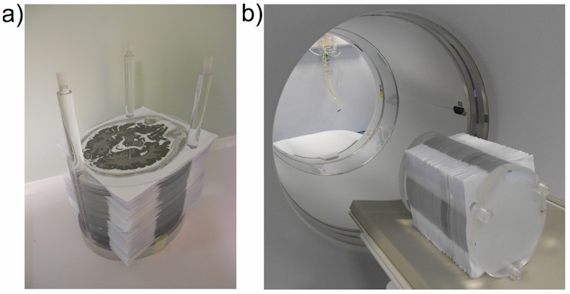
- Berthon et al Towards standardisation of PET-autosegmentaion with the ATLAAS machine learning algorithm, Radiother. Oncol. (2016) 119 (Supp 1): S452
Winner of the Manufactures' Award for Innovation 2015: IPEM
- ATLAAS: an automatic decision tree-based learning algorithm for advanced image segmentation in positron emission tomography, Phys. Med. Biol. (2016) Jul 7;61(13):4855-69
Winner of IPEM/AAPM Travel award: IPEM/AAPM
- A Monte Carlo investigation of the accuracy of intensity modulated radiotherapy, Med. Phys. (2004) https://doi.org/10.1118/1.164451
Professional memberships
Fellow Member of the Institute of Physics and Engineering in Medicine (IPEM)
Chartered Member of the Instutte of Physics (IoP)
State Registered Clinical Scientist: Health and Care Professions Council (HCPC)
Academic positions
External examiner (research degrees): University of The Free State (South Africa), University of Cape Town (South Africa), Swansea University, Swansea (United Kingdom), Universitat Politècnica de Catalunya, Barcelona (Spain), National University of Ireland, Galway (Ireland), University of London, London (United Kingdom), Niels Bohr Institute, Copenhagen (Denmark).
Committees and reviewing
Current duties
Chair of the Research Ethics Committe of Cardiff University School of Engineering
Associate Editor of the European Journal of Medical Physics (Physica Medica), Elsevier
Member of the Welsh Government - Welsh Scientific Advisory Committee
Past duties
Vice-Chair of the American Association of Physicists in Medicine (AAPM) Task Group 211 Classification, Advantages and Limitations of the Auto-Segmentation Approaches for PET
Chair of theNational Cancer Research Institute (NCRI) Radiotherapy Trials QA Database solutions and IT subgroup
Member of the NCRI Clinical and Translational Radiotherapy Research Working Group (CTRad) Workstream 4: New Technology, Physics and Quality Assurance
Publications
We are currently unable to retrieve the list of publications. Visit our institutional repository.Teaching
In addition to providing undergraduate project, dissertation and essay supervision, I am Module Organiser for the following modules at the School of Engineering:
Between 2016 and 2021 I was also module organiser for the following module at the School of Physics and Astronomy:
- PX3247: Radiation for Medical Therapy (BSc)
Life Imaging and Data Analytics
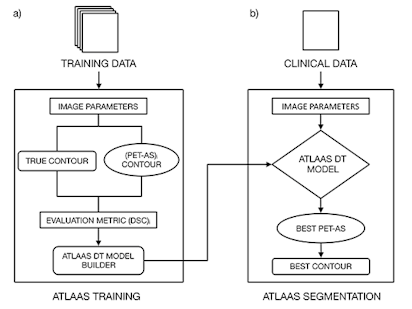
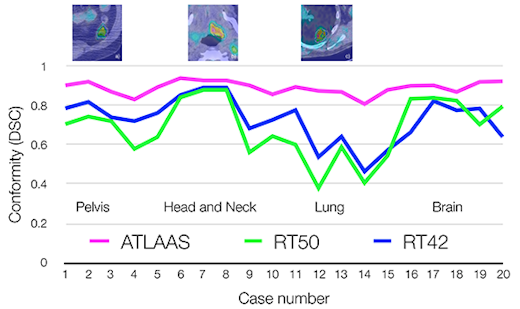
Life Imaging and Data Analytics is a team with multi-disciplinary skills established at the Cardiff University School of Engineering. LIDA is led by Dr Emiliano Spezi (Professor of Healthcare Engineering) and consists of post-doctoral research associates and PhD students. The research interest of the group spans from advanced medical image processing and radiomics to advanced computer modelling in radiation oncology. In the field of medical imaging the team has developed ATLAAS, an award-winning machine learning based tool which can be used to select the optimal Positron Emission Tomography automated segmentation method for radiotherapy treatment planning.
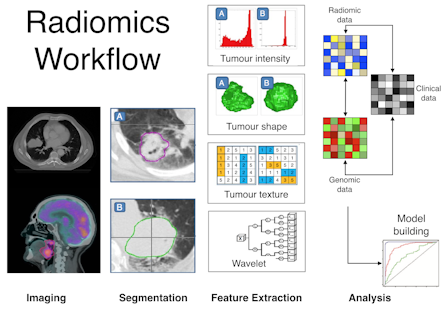
Furthermore, we have established a programme of image analysis techniques, including segmentation, texture, shape and intensity analysis and wavelet analysis, combining this with clinical and genomic data to produce diagnostic, prognostic and predictive models. We have a very intensive programme of development of radiomics algorithms, which are advanced imaging techniques that allow non-invasive, high-throughput, three-dimensional extraction of large numbers of descriptive features from any volume of interest. LIDA is a founding member of the Image Biomarker Standardisation Initiative (IBSI) to develop standardised radiomics algorithms and reporting guidelines that can make radiomics analyses reproducible and comparable. We developed SPAARC radiomics, a tool for multimodal quantitative image analysis incorporating 164 features all compliant and validated in accordance with the IBSI recommendations. Features include morphology, intensity-based statistics, intensity and intensity volume histograms and grey level matrixes. This is a selected list of publications featuring SPAARC radiomics:
- Palumbo, D.et al. 2021. Prediction of early distant recurrence in upfront resectable pancreatic adenocarcinoma: A multidisciplinary, machine learning-based approach. Cancers13(19), article number: 4938. (10.3390/cancers13194938)
- Mori, M.et al. 2020. Training and validation of a robust PET radiomic-based index to predict distant-relapse-free-survival after radio-chemotherapy for locally advanced pancreatic cancer. Radiotherapy and Oncology153, pp. 258-264. (10.1016/j.radonc.2020.07.003)
- Zwanenburg, A.et al. 2020. The Image Biomarker Standardization Initiative: standardized quantitative radiomics for high throughput image-based phenotyping. Radiology295(2), pp. 328-338. (10.1148/radiol.2020191145)
- Piazzese, C.et al. 2019. Discovery of stable and prognostic CT-based radiomic features independent of contrast administration and dimensionality in oesophageal cancer. PLoS ONE14(11), article number: e0225550. (10.1371/journal.pone.0225550)
- Whybra, P.et al. 2019. Assessing radiomic feature robustness to interpolation in 18F-FDG PET imaging. Scientific Reports9(1), article number: 9649. (10.1038/s41598-019-46030-0)
Watch a video on radiomics research: radiomics reseach
(credit: MAASTRO Clinic).
In addition, we are building an IT infrastructure and standardised algorithms that can be included in any machine learning training and validation process. The idea is that any developed and validated prognostic/predictive model can be included in libraries as part of a Decision Support System that can be used in real time by clinicians in the clinic. LIDA and Velindre University NHS Trust were the recipients of the NHS Innovation Award 2018 (Welsh Government, Efficiency Through Technology programme). As part of the “AI Solutions for Personalised Radiotherapy” (ASPIRE) project LIDA, Velindre and Intel Corporation are working on a project aimed at training and validating AI software for the automated delineation of tumour volumes on anatomical and functional imaging modalities. The training is designed to be performed on a large retrospective dataset of labelled clinical scans and will be validated on a prospective dataset acquired throughout the duration of the project. In addition to reducing dramatically the workload in radiotherapy planning, we expect AI auto-segmented volumes to be of equal quality and more consistent than those outlined manually, which our research group have investigated extensively. The integration of AI in the clinical radiotherapy workflow will prepare the ground for future developments related to high throughput medical image analysis (radiomics), development of a fully automated radiotherapy workflow (from AI-based automated segmentation to AI-based automated planning), and development of decision support system for clinicians to use in clinical practice. LIDA and Velindre are also partners on a project (FAST-RTP2) aimed at including AI in the process of automating the preparation of external radiotherapy plans.
Machine learning applications for personalized medicine are highly dependent on access to sufficient data. Large datasets from a broad range of different populations representing the variation in the entire cancer patient population need to be acquired and used to learn prediction models. In LIDA we use a distributed learning approach which was designed to address ethical and legal boundaries and to limit the impact of data privacy collaboration between research institutes. Cardiff University and The Christie NHS Foundation Trust are the only two UK centers participating to the European Computer Assisted Theragnostics project (EuroCAT) project and to the Community in Oncology for Rapid Learning (CORAL). CORAL includes almost 30 cancer centres worldwide (Netherlands, USA, UK, India, China, South-Africa, Australia, Italy, Germany, Belgium, Canada, Denmark). CORAL is based on a distributed approach in which data do not cross the firewall, where data is made semantically interoperable locally, and where centres allow applications to enter their firewall and use their data to answer a particular research questions, without any patient identifiable information being exposed/shared. Applications are focused on machine learning and modelling to predict for instance overall survival in a particular tumour site.
Watch a video on distributed learning in radiation oncology and on personal health trains:
distributed learning in radiation oncology
(credit: MAASTRO Clinic).
Members of the LIDA team
Dr Philip Whybra (Research associate)
Miss Iona Foster (PhD candidate)
Mr Emad Alsyed (PhD candidate)
Miss Elisabetta Cagni (PhD candidate)
Mr Kerim Duman (PhD candidate)
Associated members of the LIDA team
Prof John Staffurth (Professor Cinical Oncology, Cardiff University School of Medicine and Velindre Cancer Centre)
Dr Kieran Foley (Consultant Radiologist, Velindre Cancer Centre)
Contracts
| Title | Role | Sponsor | Value | Duration |
|---|---|---|---|---|
| ASPIRE: AI Solutions for Personalised Radiotherapy (Efficiency Through Technology programme) | Co-PI | Welsh Government and Intel Corp | 198,030 | 2018-2020 |
| DOTATER+: Advanced Personalised 3D Dosimetry for a clinical trial in peptide radionuclide therapy | PI | Cancer Research Wales | 80,341 | 2015-2018 |
| ARENA: Extension of RTTQA outlining activity into the educational arena | Co-PI | Velindre NHS Trust | 340,200 | 2018-2021 |
| PEARL: PET-based Adaptive Radiotherapy Clinical Trial | Co-I | Cancer Research Wales | 720,000 | 2017-2021 |
| FAST-RTP2: Implementing automated techniques in radiotherapy treatment planning | Co-I | Velindre NHS Trust | 76,430 | 2018-2021 |
| STORM_GLIO: Developing Radiomics as an Imaging Biomarker in High Grade Glioma | Co-PI | Velindre NHS Trust | 37,835 | 2018-2021 |
TEXRAD: Establishing image derived prognostic and predictive biomarkers of radiotherapy treatments and assessing treatment response using texture analysis | Co-PI | Velindre NHS Trust - Moondance Foundation | 81,540 | 2017-2020 |
Past grants and contracts
Title: Informatics Platform for Advanced Cancer Imaging Research
Value: £18,638
Role: Principal Investigator
Period: 2017
Funding body: Data Innovation and Research Institute
Title: Raydose GUI development
Value: £26,646
Role: Principal Investigator
Period: 2015-2016
Funding body: EURAMET - Velindre NHS Trust
Title: Advanced FDG PET-CT target volume delineation in Intensity Modulated Radiotherapy planning for Head and Neck cancers
Value: £45,000
Role: Principal Investigator
Period: 2014-2015
Funding body: Cancer Research Wales
Title: 3-D Printed sources for High-Resolution Molecular Imaging
Value: £10,000
Role: Principal Investigator
Period: 2014-2015
Funding body: Velindre NHS Trust
Title: RAYDOSEPLAN a multimodality platform for treatment planning research in molecular radiotherapy
Value: €242,000
Role: Principal Investigator
Period: 2012-2015
Funding body: European Association of National Metrology Institutes (EURAMET)
Title: Adaptive Image-Guided Radiotherapy Strategies for Bladder and Cervical Cancer to Enable Dose Escalation and Reduce Late Toxicity
Value: £60,000
Role: Co-Investigator
Period: 2014-2015
Funding body: Cancer Research Wales
Title: XVI5IEC: Evaluation of patient dose to skin and eye lens for default CBCT settings
Value: £8,000
Role: Principal Investigator
Period: 2013
Funding body: Elekta Ltd Crawley UK
Title: XVIoptimal5: Evaluation of patient dose reduction and image quality for new Cone Beam CT settings
Value: £8,100
Role: Principal Investigator
Period: 2013
Funding body: Elekta Ltd Crawley UK
Title: MOZART: Parameters affecting tumour control and toxicity in oesophageal cancer: a multi-dimensional outcome analysis
Value: £67,000
Role: Principal Investigator
Period: 2012-2015
Funding body: Cancer Research Wales
Title: POSITIVE: Optimisation of positron emission tomography based target volume delineation in Head and Neck radiotherapy
Value: £81,000
Role: Principal Investigator
Period: 2011-2014
Funding body: Cancer Research Wales
Title: RAYDOSE: Assessment of patient dose using novel radioisotopes in Molecular Targeted Radiotherapy
Value: £170,000
Role: Principal Investigator
Period: 2010-2012
Funding body: Wales Office of Research and Development for Health and Social Care (WORD)
Title: A Comparison of Convolution/Superposition and Monte Carlo methods for conformal radiotherapy
Value: £80,000
Role: Co-Investigator
Period: 2009-2014
Funding body: Cancer Research Wales
Title: XVIctdi: Cone Beam CT dosimetry using an optimised phantom
Value: £20,000
Role: Principal Investigator
Period: 2009-2014
Funding body: Elekta Ltd Crawley UK
Title: Extending the RTGrid portal to the wider user community
Value: £52,000
Role: Co-Investigator
Period: 2009
Funding body: JISC ENGAGE e-Infrastructure programme
Title: MRI in radiotherapy planning
Value: £10,000
Role: Principal Investigator
Period: 2009
Funding body: Velindre NHS Trust
Title: The application of GafChromic film in routine and non routine quality control methods in radiotherapy physics
Value: £4,000
Role: Principal Investigator
Period: 2007
Funding body: Velindre NHS Trust
Supervision
Areas of interest
I am available to supervise Post Graduate Research students in the following areas:
- MEDICAL IMAGE ANALYSIS
- RADIOMICS
- MACHINE LEARNING IN RADIATION ONCOLOGY
- MONTE CARLO MODELLING OF RADIATION TRANSPORT
- MOLECULAR RADIOTHERAPY DOSIMETRY
- ADVANCED RADIOTHERAPY TECHNIQUES
PubMed search of publications by Professor Spezi (link).
Interdisciplinary Precision Oncology Cardiff Hub (IPOCH)
We offer 7 funded studentships available at the Interdisciplinary Doctoral Training Hub in Precision Oncology at Cardiff University. The studentships available are in biomedical imaging, pathology and genomics. These 3.5-year studentships provide funding for fees and stipend at the rate set by the UK Research Councils, as well as other research training and support costs, and are available to UK, EU and International students.
Find out more at IPOCH research website and FindAPhD.
Other opportunities for Post Graduate Research
We have the following exciting opportunity for self-funded PhD candidates
If you are interested in enrolling on Postgraduate Research at the School og Engineering, contact the PGR Enquiries Team to know more about all current opportunities.
Current PGR projects
Title | Student | Status | Degree | Type | Role |
| IMPLEMENTING AUTOMATED TECHNIQUES IN RADIOTHERAPY TREATMENT PLANNING | FOSTER Iona | Current | PhD | Full time | Main supervisor |
| PET IMAGE TEXTURE ANALYSIS AND RADIOTHERAPY | ALSYED Emad | Current | PhD | Full time | Main supervisor |
RADIOMICS ENHANCED DEEP LEARNING-BASED CLASSIFIER TO IMPROVE SURVIVAL IN GLIOBLASTOMA MULTIFORME | DUMAN Kerim | Current | PhD | Full time | Main supervisor |
AUTOMATED PLANNING FOR IMAGE-GUIDED RADIOTHERAPY | CAGNI Elisabetta | Current | PhD | Full time | Main supervisor |
OPTIMISATION OF IMAGE-BASED DOSIMETRY FOR Y90 SELECTIVE INTERNAL RADIATION THERAPY | YILDIRIM Mehmet | Current | PhD | Full time | Main supervisor |
Current supervision


Past projects
Title | Student | Status | Degree | Type | Role |
STANDARDISATION AND OPTIMISATION OF RADIOMIC TECHNIQUES FOR THE IDENTIFICATION OF ROBUST IMAGING BIOMARKERS IN ONCOLOGY | WHYBRA Philip | Completed | PhD | Full time | Main supervisor |
PERSONALISED ADVANCED 3D DOSIMETRY IN PEPTIDE RECEPTOR RADIONUCLIDE THERAPY | BERENATO Salvatore | Completed | PhD | Full time | Main supervisor |
ADVANCED AUTOMATED PET IMAGE SEGMENTATION IN RADIATION THERAPY | PARKINSON Craig | Completed | PhD | Full time | Main supervisor |
DEVELOPMENT OF TECHNIQUES FOR VERIFICATION OF ADVANCED RADIOTHERAPY BY PORTAL DOSIMETRY | MD RADZI Yasmin | Completed | PhD | Full time | Main Supervisor |
RADIOTHERAPY DOSE CALCULATION IN OESOPHAGAEL CANCER: COMPARISON OF ANALYTICAL AND MONTE CARLO METHODS | JOHNS Dewi | Completed | PhD | Part time | Main supervisor |
PARAMETERS AFFECTING TUMOUR CONTROL AND TOXICITY IN OESOPHAGEAL CANCER: A MULTI-DIMENSIONAL OUTCOME ANALYSIS | CARRINGTON Rhys | Completed | PhD | Full time | Co supervisor |
OPTIMISATION OF POSITRON EMISSION TOMOGRAPHY BASED TARGET VOLUME DELINEATION IN HEAD AND NECK RADIOTHERAPY | BERTHON Beatrice | Completed | PhD | Full time | Co supervisor |